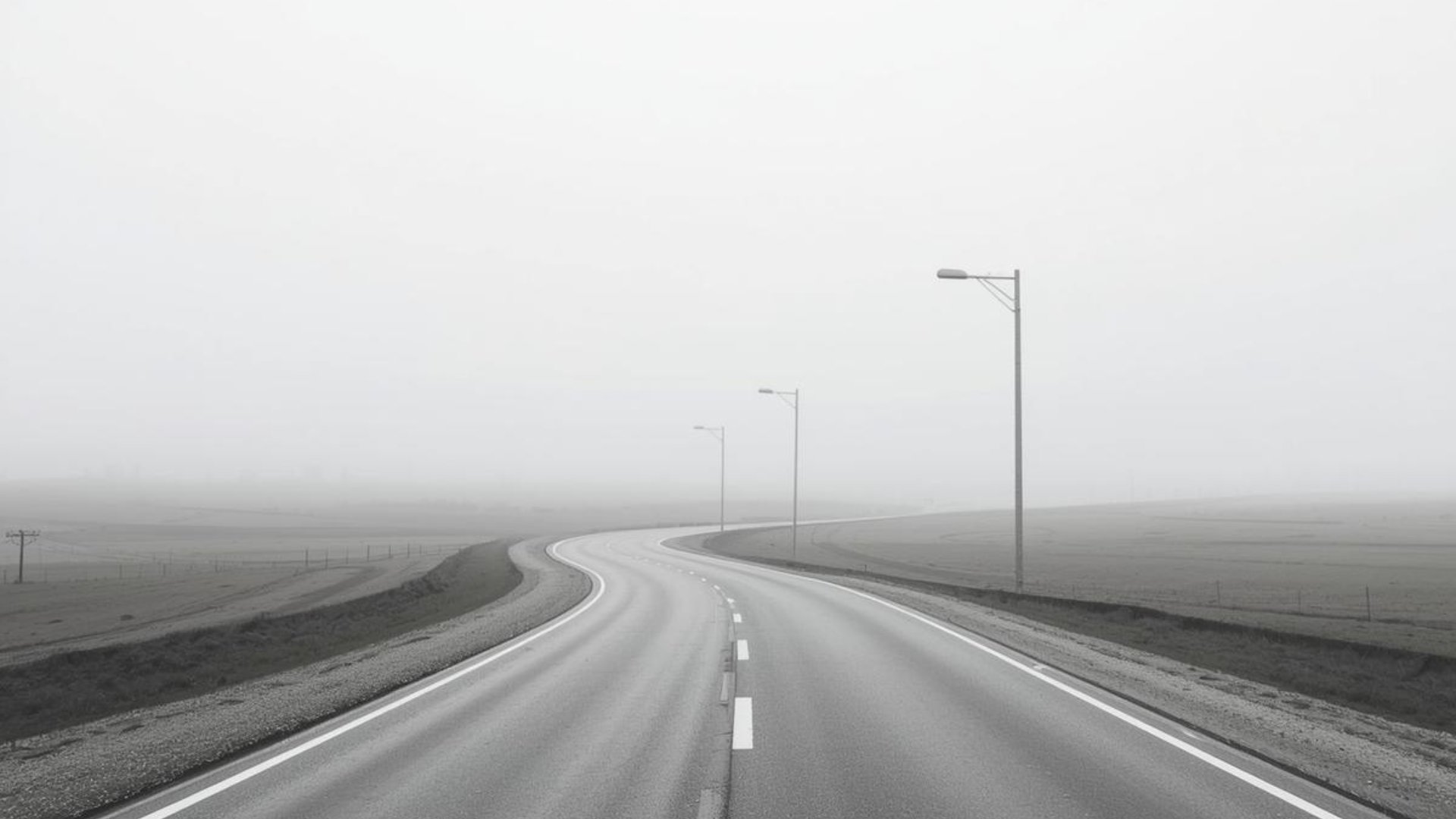
0. Recovery Is Not Returning. It’s Redesigning Life.
Recovery is often described as returning to who you were before.
But for many people, that return never really happens.
Illness, disability, or life disruption doesn’t just interrupt a career —
it changes the assumptions your life was built on.
This is not a story about going back.
It is about redesigning life after everything has shifted.
1. Recovery as “return” is the default assumption
Recovery is usually understood as a process of restoration.
An injury heals.
A condition stabilizes.
Treatment ends.
From there, life is expected to resume.
Work schedules, social roles, and daily routines are treated as destinations —
places one should eventually return to once recovery is considered complete.
The goal is continuity.
The timeline may shift, but the structure remains the same.
This framework is not malicious.
It is simply how modern systems are designed to function.
Healthcare systems focus on measurable outcomes.
Employment systems assume uninterrupted capacity.
Social narratives favor linear progress — illness, treatment, recovery, return.
Within this structure, recovery is not only a medical state
but a social expectation.
It carries an implicit promise:
if you endure the process, you will get your old life back.
For many people, this promise is never questioned.
It aligns with how institutions operate
and how success is quietly defined.
2. When that assumption no longer holds
For some people, however, recovery does not lead back to the same life.
The body may stabilize.
Procedures may succeed.
Clinical indicators may improve.
From the outside, everything appears resolved.
Yet daily life no longer fits the old structure.
Energy levels fluctuate.
Pain or discomfort persists in unpredictable ways.
Cognitive or emotional capacity changes subtly but consistently.
Work that once felt manageable now requires recalculation.
Time is experienced differently.
Rest is no longer optional but structural.
This discomfort is often invisible to others.
There is no clear crisis.
No obvious failure.
Instead, there is a quiet mismatch
between the life that is expected to resume
and the life that can actually be lived.
This experience is not rare.
But it remains largely unnamed.
Because the system recognizes recovery only as return,
anything outside that path is difficult to articulate.
3. It is not a failure to recover — the assumptions changed
What breaks in these situations is not effort or resilience.
People often do everything that is asked of them.
They follow treatment plans.
They comply with expectations.
They attempt to resume their roles.
What no longer holds are the assumptions
that once supported work, identity, and daily rhythm.
The map remains the same,
but the terrain has shifted.
Time no longer behaves as it once did.
Capacity is no longer consistent.
Risk is no longer abstract.
Trying to “return” using the old map
often creates more friction than clarity.
The problem is not weakness.
It is misalignment.
At some point, the question quietly changes.
Not how to go back.
Not how to endure longer.
But how to live well
under new conditions that cannot be ignored.
This shift is rarely dramatic.
It happens gradually,
through small failures of fit.
4. Redesigning life is not a comeback
Redesigning life is often misunderstood as a form of recovery success.
It is not.
It is not a comeback.
It is not a return to productivity or normalcy.
And it is not a personal triumph narrative.
Redesign is a quiet process.
It begins with acknowledging new limits —
physical, cognitive, emotional, or situational —
without turning them into moral judgment.
Limits are treated as data,
not as verdicts.
Daily life is adjusted accordingly.
Work structures change.
Priorities shift.
Pace is recalibrated.
This process does not move in straight lines.
There is no final state where redesign is “complete.”
Conditions evolve.
Capacity fluctuates.
Context changes.
Redesign is therefore ongoing.
Not because of indecision,
but because the reality it responds to
is itself unstable.
5. What this site is concerned with
This site does not offer solutions or instructions.
It does not provide recovery plans,
career advice,
or productivity frameworks.
Instead, it looks at illness and disability
not primarily as medical conditions,
but as lived experiences
that quietly reshape daily assumptions.
It examines work interruption
not as a personal setback,
but as a structural disruption
that exposes how fragile existing designs can be.
And it explores decision-making
under changed conditions —
when familiar options no longer apply
in the same way they once did.
The focus is not optimization.
It is orientation.
Not fixing problems,
but understanding contexts.
Not restoring the past,
but navigating a present
that does not follow inherited rules.
6. Closing — staying with the redesign
This site is not about returning to who you were.
It exists for those
whose lives did not resume as expected,
and who had to rethink
what “living well” might mean.
Not once.
But repeatedly.
Redesign, in this sense,
is not a conclusion.
It is a way of staying present
with a life that has changed —
without forcing it back
into shapes that no longer fit.