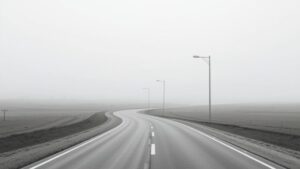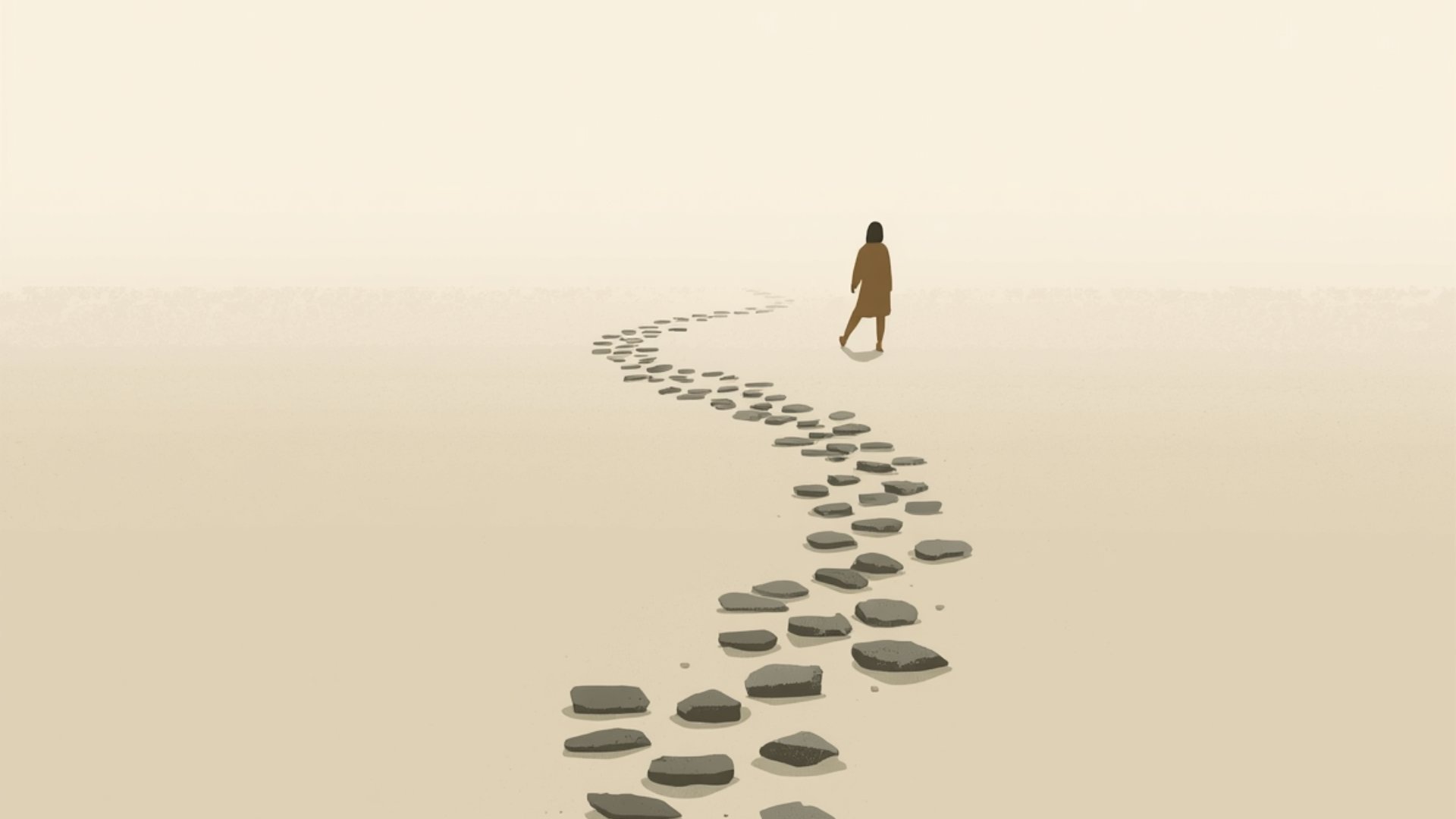
There is a common belief that meaningful change begins with a major decision.
People imagine turning points as dramatic moments: resigning from a job, moving to another city, starting a new career, or completely changing the direction of life.
But after illness, that way of thinking often stops working.
When your physical condition changes from day to day, the future becomes difficult to predict. Long-term plans may still matter, but they are no longer the place where stability begins.
Instead, stability often starts with something much smaller.
A single decision made today.
Not because it transforms everything immediately, but because it keeps tomorrow open.
Sometimes the most important decision is not the biggest one.
It is simply the next one.
Big Decisions Assume a Stable Future
Many life decisions are built on the assumption that we can reasonably predict the future.
We accept a promotion because we expect to handle greater responsibility.
We commit to a new project because we assume our capacity will remain relatively consistent.
We make long-term plans because we believe today’s conditions will continue.
Illness changes that assumption.
Energy may fluctuate.
Symptoms may appear without warning.
Recovery may move forward one week and backward the next.
Under these conditions, large decisions become harder—not because we have become less capable, but because the future itself has become less predictable.
The problem is not uncertainty alone.
It is relying on certainty that no longer exists.
Small Decisions Preserve Options
When certainty disappears, flexibility becomes more valuable than confidence.
Small decisions rarely solve everything at once.
Instead, they protect possibilities.
Rather than trying to redesign your entire life overnight, you make one adjustment that reduces unnecessary strain today.
Rather than searching for the perfect future, you make one decision that leaves more options available tomorrow.
These choices may seem insignificant when viewed individually.
Yet over time they quietly change the direction of life.
Large decisions often close alternatives.
Small decisions often preserve them.
And when the future is uncertain, preserving options can become a form of stability.
Survival Is Often Built Through Repeated Adjustments
Many people think survival depends on extraordinary strength.
But after illness, survival often depends on something much quieter.
Adjustment.
Not once.
Repeatedly.
The body changes.
Energy changes.
Circumstances change.
Each change asks for another small response.
Sometimes that response is practical.
Sometimes it is emotional.
Sometimes it simply means accepting that today’s version of yourself is different from yesterday’s.
This process rarely feels dramatic.
Most of the time, it feels ordinary.
Almost invisible.
Yet these repeated adjustments slowly create a life that can continue despite uncertainty.
Tiny Decisions Quietly Redesign Identity
Identity rarely changes all at once.
It shifts through repeated choices.
Many people imagine identity as something stable—a fixed description of who they are.
But after illness, identity often becomes something that must be rebuilt gradually.
Every small decision reflects a different relationship with yourself.
Choosing to stop before exhaustion.
Choosing to leave room for recovery instead of constantly filling every available hour.
Choosing progress that can be sustained rather than progress that demands sacrifice.
None of these decisions seem large enough to redefine a person.
Yet together, they do.
Identity is rarely transformed by a single life event.
More often, it is reshaped by the accumulation of ordinary decisions made under new circumstances.
Why We Underestimate Small Choices
We naturally notice dramatic events.
Graduation.
Marriage.
Career changes.
Major illnesses.
These moments are easy to remember because they appear to divide life into clear chapters.
Small decisions do not feel like that.
They happen quietly.
Often without celebration.
Sometimes without anyone noticing.
Because they feel ordinary, we tend to underestimate their importance.
But when we look back years later, it is often these repeated ordinary choices that explain why life gradually moved in one direction instead of another.
Major events may change our circumstances.
Daily decisions shape how we live within those circumstances.
The Psychology of Predictability
One of the most difficult parts of living after illness is not simply physical limitation.
It is losing the ability to predict yourself.
Before illness, many people trust their own consistency.
If they make a plan, they expect themselves to carry it out.
If they work hard today, they assume they can do the same tomorrow.
That confidence quietly shapes daily life.
Illness often weakens that confidence.
Not because determination disappears, but because capacity becomes unpredictable.
In that situation, trying to regain complete control often creates frustration.
A healthier approach is to reduce the amount of certainty your plans require.
When your future capacity is unclear, smaller decisions become easier to adapt without feeling like failure.
They leave room for change instead of demanding perfect consistency.
Designing Systems Instead of Depending on Motivation
Many people wait for motivation before making changes.
But motivation rises and falls.
Health does too.
Sustainable change rarely depends on either.
Instead, it depends on designing ways of living that remain possible even when conditions are imperfect.
After illness, this often means making choices that require less certainty rather than more.
Instead of depending on ideal circumstances, you build a life that can continue through ordinary fluctuations.
This shift is subtle.
Yet it changes the question completely.
Instead of asking,
“Can I always do this?”
you begin asking,
“Can this continue even when life becomes unpredictable?”
That question often leads to more realistic—and more sustainable—answers.
Living Without Waiting for Perfect Clarity
Many people postpone decisions because they want complete confidence first.
They wait until they know exactly what the future will look like.
But after illness, that moment may never come.
If certainty becomes a requirement, life can remain permanently on hold.
Small decisions offer another way forward.
They allow movement without requiring complete clarity.
Each decision provides a little more information.
Each adjustment reveals something that could not have been understood in advance.
Instead of demanding certainty before acting, you learn through acting carefully.
Progress becomes something discovered step by step, rather than something fully planned from the beginning.
For many people working after illness with unpredictable energy levels, this gradual approach is not simply practical.
It becomes one of the few ways to keep moving without constantly fighting uncertainty.
Stability Is Built Backward
Many people think stability is something we find first and build life upon.
After illness, the opposite often becomes true.
We build stability by repeating decisions that are small enough to continue.
No single decision creates an entirely new life.
But hundreds of ordinary decisions quietly create a different future.
Looking back, those choices often appear connected.
At the time, they rarely felt significant.
That may be why small decisions are so easy to overlook.
Their importance is usually visible only in hindsight.
Stability is not always created by making one perfect decision.
Sometimes it is created by making the next reasonable decision—and then repeating that process again and again.
Final Thoughts
When life becomes uncertain, it is natural to search for one decision that will solve everything.
One clear answer.
One perfect plan.
One permanent direction.
But life after illness rarely changes that way.
More often, it changes through small decisions that quietly accumulate over time.
Each one protects possibilities.
Each one creates a little more room to adapt.
Each one makes the future slightly easier to face.
Eventually, those ordinary decisions become something larger than they first appeared.
They become the foundation of a different kind of stability.
Not the stability that comes from certainty.
But the stability that comes from learning how to continue, even when certainty never fully returns.
🔗Related Articles