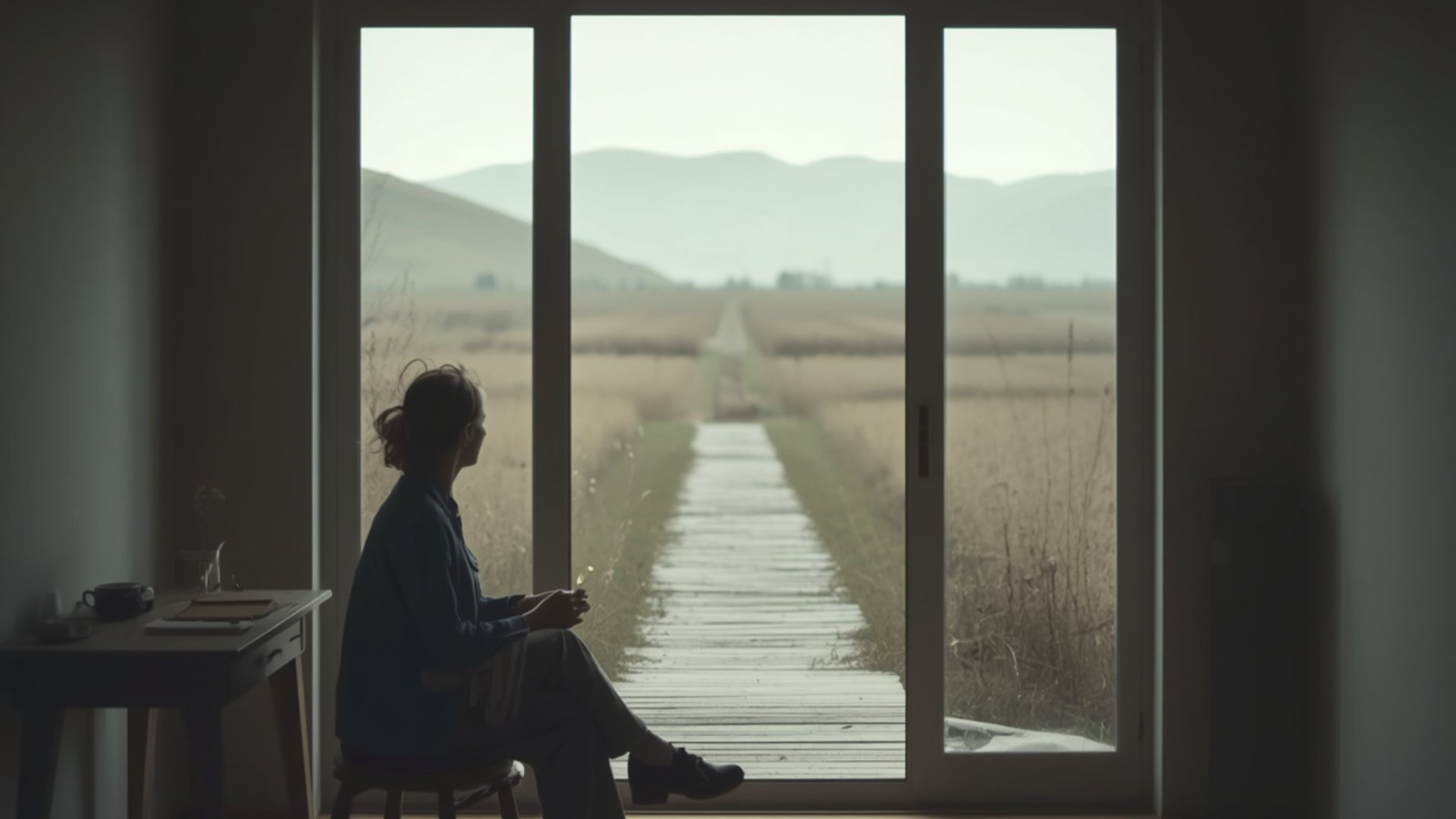
There is a version of success that is easy to recognize from the outside.
A higher income.
A bigger career.
More responsibility.
More projects.
More achievements.
A busier schedule.
Growth is visible.
Expansion is easy to explain.
But a sustainable life does not always move in that direction.
Sometimes, building a life that can actually continue means working fewer hours, earning less than you once hoped to earn, turning down opportunities, leaving more space in your schedule, or choosing stability over acceleration.
From the outside, this can look like a smaller life.
But from the inside, it may feel like the first life that truly fits.
That difference matters.
Because perhaps the question is not whether our lives are becoming bigger.
Perhaps the better question is whether the lives we are building can actually be lived.
We Have Learned to Recognize Expansion as Progress
For much of life, progress is measured by addition.
We gain skills.
We gain experience.
We earn more money.
We take on greater responsibility.
We move toward larger goals.
This way of thinking is deeply embedded in how we understand careers and adulthood.
When someone gets promoted, we recognize progress.
When someone earns more, we recognize progress.
When someone starts a business and expands it, we recognize progress.
But when someone deliberately reduces their workload, chooses a smaller business, declines a promotion, or decides that earning enough is more important than earning as much as possible, the meaning becomes less obvious.
It can look like retreat.
It can look like lost ambition.
It can even look like failure.
Yet reduction and failure are not the same thing.
Sometimes reduction is simply what happens when we begin removing things that no longer fit the life we are actually capable of living.
A Smaller Life Is Not Necessarily a Lesser Life
There is an important distinction between having less and living less.
They are not the same.
You can have fewer working hours and still do meaningful work.
You can have fewer professional ambitions and still continue learning.
You can earn less money and still have greater control over your life.
You can participate in fewer things and become more present in the things you choose to keep.
The external scale may decrease while the internal quality increases.
This is difficult to measure because many of the things that make a life sustainable are almost invisible.
Enough time to recover.
Enough space to think.
Enough financial margin to say no.
Enough flexibility to adjust when circumstances change.
Enough energy left at the end of the day for family, interests, or simply being alive outside of work.
None of these things look particularly impressive from the outside.
But they can completely change what everyday life feels like.
Sustainability Begins With Accepting That Capacity Has Limits
For a long time, I thought primarily about what I could do.
Could I work?
Could I earn?
Could I learn something new?
Could I build another source of income?
Could I continue writing?
These questions still matter.
But eventually I realized that there was another question underneath them:
Can I keep doing this?
That is a very different standard.
Something can be possible today without being sustainable for years.
A workload can be manageable for one week and exhausting over six months.
A schedule can technically fit into a calendar while leaving no room for unexpected problems.
An opportunity can be financially attractive while demanding more energy than you can reliably provide.
This becomes especially important when working after illness with unpredictable energy makes a normal full-time schedule difficult to sustain.
But the principle is not limited to illness.
Everyone has limits.
Time is limited.
Attention is limited.
Energy is limited.
Family responsibilities create limits.
Age changes limits.
Unexpected events reveal limits we did not know existed.
A sustainable life begins when we stop treating every limit as an obstacle that must be defeated.
Some limits are information.
They tell us what kind of life we need to design.
The Goal Is Not to Make Everything Smaller
Choosing sustainability does not mean reducing everything.
That would be another extreme.
I still want to work.
I still want to earn.
I still want to learn.
I still want to create things that did not exist before.
I still think about the future.
The difference is that I no longer believe every part of life needs to expand at the same time.
Perhaps income grows slowly while working hours remain limited.
Perhaps knowledge grows while professional responsibility stays small.
Perhaps a project becomes more valuable without becoming larger.
Perhaps several modest sources of income are more sustainable than one demanding source.
Growth can still exist.
It simply does not have to look like constant expansion.
This changes the question from:
How much can I achieve?
to:
What can I continue building without destroying the conditions that allow me to build it?
That is not the rejection of ambition.
It is a different definition of ambition.
What Looks Inefficient May Actually Be Resilient
Modern work often rewards efficiency.
Do more in less time.
Eliminate unused capacity.
Optimize schedules.
Maximize productivity.
In a spreadsheet, this makes sense.
In a human life, it can become dangerous.
A life operating at 100 percent capacity has almost no ability to absorb change.
One unexpected problem can disrupt everything.
A bad day.
A family issue.
A medical appointment.
A delayed project.
A sudden expense.
A period when concentration simply does not come as easily as expected.
If every hour, every yen, and every piece of energy has already been allocated, there is nowhere for disruption to go.
This is why what looks like unused capacity may actually be resilience.
An empty afternoon is not necessarily wasted time.
A financial buffer is not wasted money.
Working below your maximum capacity is not necessarily laziness.
A slower schedule is not necessarily poor time management.
Margin often looks inefficient until something goes wrong.
Then it becomes the thing that keeps everything else standing.
Saying No Can Be a Form of Design
One of the hardest parts of building a sustainable life is that opportunities do not automatically become good choices simply because they are available.
A new project may bring more income.
A new responsibility may bring recognition.
A new business idea may have potential.
A new commitment may sound interesting.
The old instinct is often to ask:
Why not?
But sustainability requires another question:
What will this require me to keep doing after I say yes?
Every yes creates a future obligation.
That matters more than the excitement of the moment.
If something requires a pace that can only be maintained when everything goes well, it may not belong in a sustainable life.
So sometimes the most important decisions are invisible.
Not taking the project.
Not filling the empty day.
Not increasing the workload simply because there is temporary capacity.
Not turning every skill into another obligation.
These decisions rarely produce obvious achievements.
But they shape the structure of life.
Enough Is a Difficult Number to See From the Outside
One reason sustainable living can appear small is that the idea of “enough” is personal.
There is no universal number.
Enough income depends on expenses, responsibilities, savings, and priorities.
Enough work depends on capacity.
Enough ambition depends on what else you want your life to contain.
Enough rest depends on what your body and mind require.
From the outside, someone else may always be doing more.
Working longer.
Earning more.
Growing faster.
Building something larger.
If comparison becomes the standard, enough disappears.
There is always another level.
But sustainability requires defining a boundary somewhere.
Not because growth is bad, but because unlimited growth is not a realistic design principle for a human life.
At some point, we need to decide what we are trying to protect.
A Sustainable Life Leaves Something for Tomorrow
I have gradually come to think that sustainability is not really about doing less.
It is about not consuming tomorrow in order to complete today.
That applies to energy.
It applies to money.
It applies to motivation.
It applies to relationships.
And it applies to work.
There are ways of living that produce impressive short-term results by borrowing heavily from the future.
You can keep pushing.
You can remove rest.
You can accept every opportunity.
You can treat exhaustion as temporary.
Sometimes that works.
For a while.
But if the structure depends on continuously borrowing from tomorrow, eventually tomorrow arrives with nothing left.
A sustainable life tries to avoid that.
It leaves something unused.
Some energy.
Some time.
Some money.
Some curiosity.
Some possibility.
Not because those resources have no purpose, but because their purpose is to keep the future open.
The Outside View Cannot Measure What the Life Costs
Two lives can look similar from the outside while requiring completely different amounts of effort to maintain.
And two lives can look very different while producing similar levels of satisfaction.
This is why external comparison has limits.
Other people can see the job title.
They cannot see the energy required to maintain it.
They can see income.
They cannot see what had to be sacrificed to earn it.
They can see that someone works fewer hours.
They cannot necessarily see what those hours make possible elsewhere.
They can see a smaller career.
They cannot see the stability surrounding it.
The outside view measures visible outcomes.
The inside view experiences the cost.
Only the person living the life knows both.
Perhaps the Real Goal Is a Life That Can Continue
There was a time when I thought a better future meant making life larger.
More income.
More possibilities.
More freedom.
More achievement.
I still value many of those things.
But I no longer think “more” is enough to define progress.
A life can become larger and increasingly fragile at the same time.
It can contain more opportunities while leaving less room to live.
It can look successful while becoming harder to sustain.
So now I think about progress differently.
Can I continue this way of working?
Can I adapt when circumstances change?
Can I protect enough time and energy for the people and things that matter?
Can I earn without making income the only measure of whether the system works?
Can I build slowly enough that I do not have to repeatedly rebuild from exhaustion?
These questions may lead to a life that looks smaller from the outside.
Fewer hours.
Fewer commitments.
Slower growth.
More empty space.
But perhaps that empty space is not evidence that something is missing.
Perhaps it is part of the design.
Because the purpose of a sustainable life is not to become as large as possible.
It is to create a life that still has enough room to continue changing, working, learning, and living.
And if that life looks smaller from the outside, that may be a reasonable price to pay for finally building something that can last.
🔗Related Articles