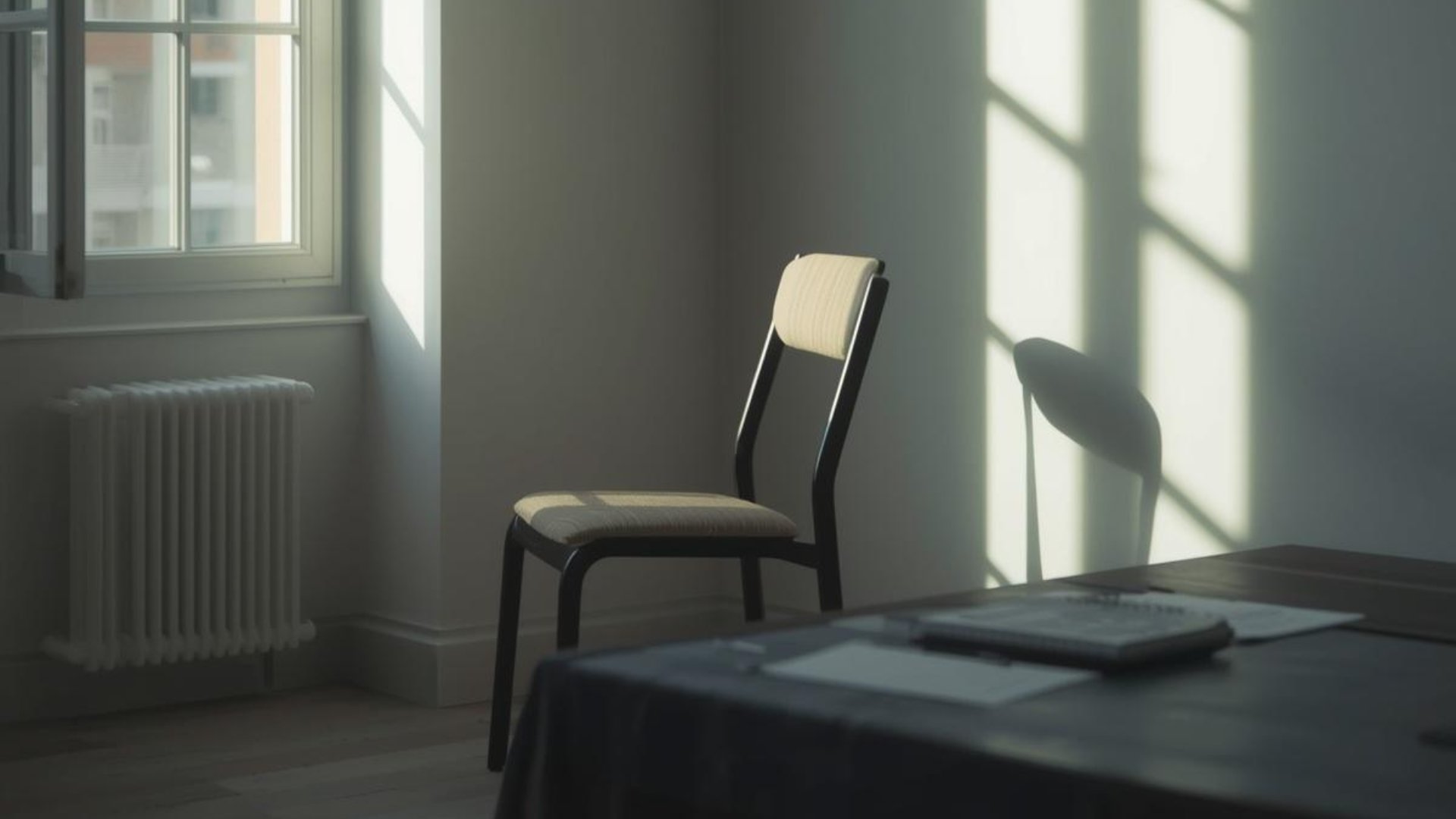
For a long time, stability is treated as the goal.
A stable job.
A stable income.
A stable routine.
It represents safety.
It represents control.
It represents a life that “works.”
So when illness disrupts life,
the natural instinct is to return to stability.
To get back to normal.
To rebuild what was lost.
But something subtle changes after illness.
Stability does not feel like a destination anymore.
It feels like something that no longer fits.
Stability Is Built on Predictability
Stability is not just about external conditions.
It depends on something deeper.
Predictability.
You can only maintain a stable routine
if your energy, focus, and capacity behave consistently.
Work schedules assume this.
Daily habits assume this.
Even long-term planning assumes this.
But after illness, predictability weakens.
Some days follow the plan.
Others don’t.
And the difference between those days is not always controllable.
This makes stability harder to maintain—not because you failed,
but because the foundation it relies on has shifted.
When Stability Turns into Pressure
At first, the idea of stability still feels reassuring.
It gives you something to aim for.
Something familiar.
But over time, it can turn into pressure.
Because every deviation starts to feel like a problem.
A day when you cannot follow your routine
feels like falling behind.
A week with lower energy
feels like losing progress.
Instead of supporting you, stability becomes a standard you cannot consistently meet.
And that gap creates friction.
The Hidden Cost of Chasing Stability
Chasing stability after illness often leads to an invisible cycle.
You push yourself to maintain a consistent pace.
You ignore fluctuations.
You try to “normalize” your output.
Sometimes it works—for a while.
But then the system breaks.
Fatigue accumulates.
Recovery takes longer.
Consistency becomes harder.
The more you try to stabilize,
the more unstable things become.
Because you are trying to force a condition
that no longer exists.
Variability Is Not a Problem to Solve
One of the biggest shifts is how variability is interpreted.
Before, inconsistency meant something was wrong.
After illness, inconsistency becomes part of reality.
Energy changes.
Capacity shifts.
Focus comes and goes.
This is not something you fix.
It is something you design around.
The moment this changes,
the goal itself changes.
Not stability,
but alignment with variability.
A Different Way to Think About Stability
If stability no longer works in the traditional sense,
what replaces it?
Not chaos.
Not giving up structure.
But a different definition of stability.
Instead of consistency in output,
it becomes consistency in continuity.
You may not work the same amount every day.
But you continue.
You may not follow a fixed routine.
But you return.
This kind of stability is quieter.
It does not look impressive from the outside.
But it is sustainable.
Designing Life Without Forcing Consistency
When stability is no longer the goal,
life design changes.
Instead of fixing rigid schedules,
you allow flexibility within boundaries.
Instead of daily targets,
you think in ranges.
Instead of “all or nothing,”
you allow partial progress.
For example:
- Some days are for deep work
- Some days are for maintenance
- Some days are for recovery
All of them are valid.
This reduces the pressure to perform at a constant level.
And makes it possible to keep going.
What Strength Looks Like After Illness
Before illness, strength often meant consistency.
Showing up every day.
Performing at a stable level.
Maintaining control.
After illness, strength changes.
It becomes:
- Continuing even when capacity fluctuates
- Adjusting without self-blame
- Letting go of fixed expectations
It is less visible.
But it is more resilient.
What This Shift Felt Like
There was a time when I tried to rebuild stability.
I believed that if I could just find the right routine,
everything would settle.
So I experimented.
Different schedules.
Different working hours.
Different ways of structuring the day.
On some days, it worked.
I could focus, progress, and feel a sense of control.
But on other days, the same structure felt too heavy.
Tasks that were manageable before
suddenly required more effort than expected.
I began to notice a pattern I couldn’t ignore—
working after illness feels harder, not because the work itself changed, but because energy became unpredictable in a way that stability-based systems couldn’t accommodate.
That realization changed everything.
The problem was not my effort.
It was the assumption I was trying to meet.
Once I stopped chasing stability,
and started accepting variability,
things didn’t become easier—
but they became possible to continue.
Letting Go of the Old Goal
Letting go of stability is not easy.
Because it feels like losing something important.
A sense of control.
A sense of normalcy.
A sense of certainty.
But holding on to it too tightly
can prevent adaptation.
When the environment changes,
goals must change with it.
And after illness,
the most important shift is this:
Stability is no longer the goal.
Continuity is.
Conclusion
Stability works in predictable systems.
It creates efficiency.
It creates order.
It creates confidence.
But when predictability disappears,
stability becomes fragile.
After illness, the goal changes.
Not to return to a stable state,
but to build a life that continues despite instability.
This is not a downgrade.
It is a redesign.
And in that redesign,
something more durable begins to emerge.
🔗 Related Articles