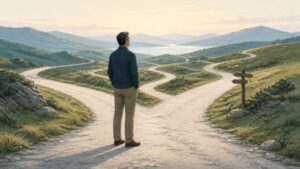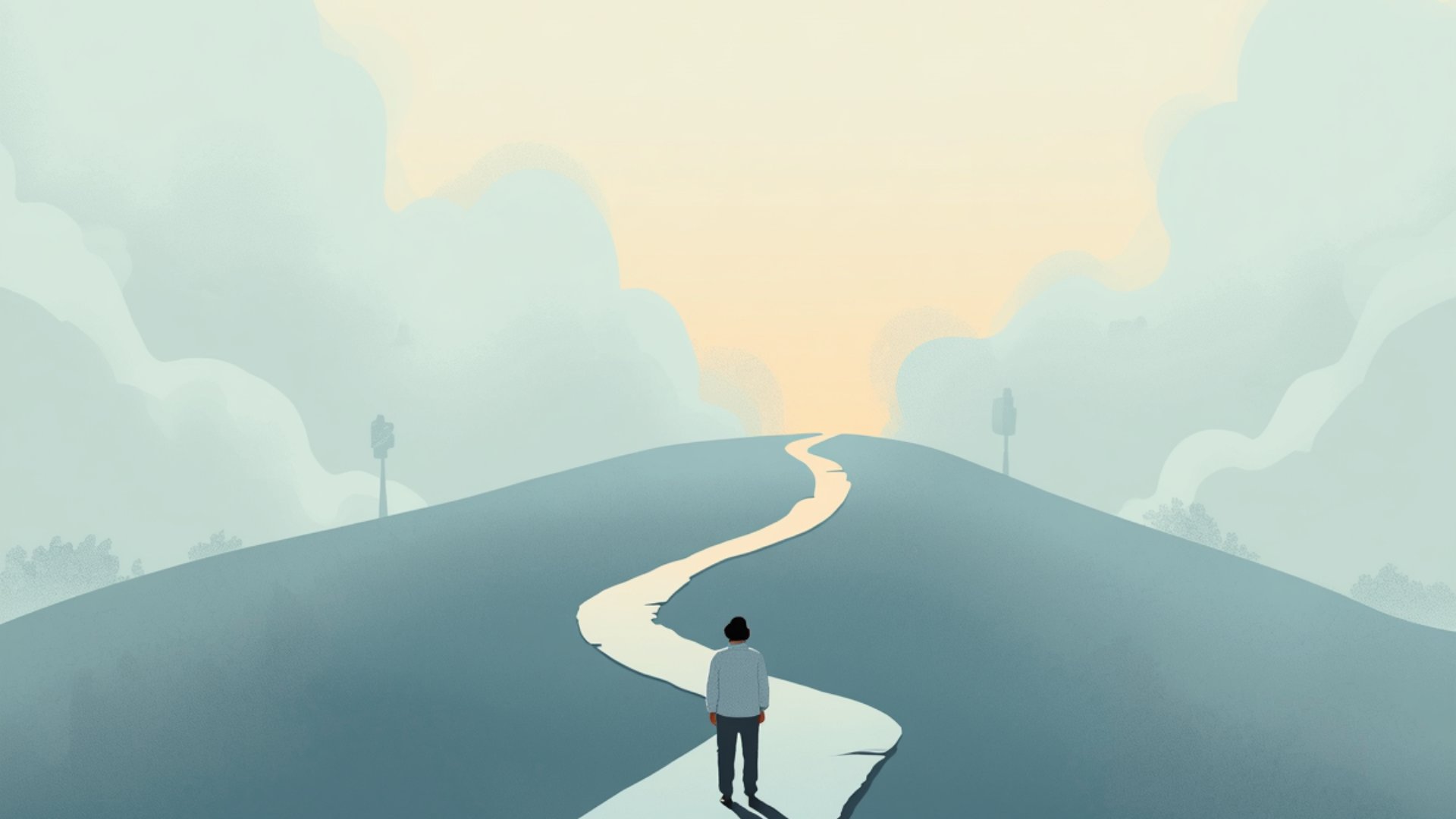
Life is often described as a story.
One event leads to another.
One decision builds upon the last.
Over time, we come to believe that who we are is defined by continuity—the uninterrupted line connecting our past, present, and future.
For many years, I believed that too.
I assumed my career would continue.
I assumed my health would remain reliable.
I assumed that the person I had spent decades becoming would simply evolve into an older version of the same identity.
Then illness interrupted that story.
Not gradually.
Not politely.
It simply cut the line.
Suddenly, many of the assumptions that had quietly supported my identity no longer existed.
And the hardest question wasn’t, “How do I recover?”
It became,
“If my old life no longer defines me, who am I now?”
Identity Often Depends More on Continuity Than We Realize
Most people never question their identity because life changes slowly.
You graduate.
You begin a career.
You gain experience.
Perhaps you build a family.
Each stage feels connected to the previous one.
The continuity itself creates stability.
Even when life becomes difficult, you still recognize the person looking back in the mirror because today’s life makes sense in relation to yesterday’s.
Illness changes that relationship.
A body that once supported your ambitions may suddenly become unpredictable.
A career that once defined your confidence may no longer fit your daily reality.
Plans that seemed obvious begin disappearing one by one.
The story still exists.
But the thread connecting each chapter feels broken.
Losing Continuity Feels Like Losing Yourself
One of the strangest experiences after illness is realizing that nothing externally may appear dramatically different, yet internally everything feels unfamiliar.
You still have your memories.
You still know your skills.
Your personality hasn’t disappeared.
But the context surrounding those things has changed.
The version of yourself that made those choices belonged to a different life.
That realization can quietly create grief.
Not because you’ve forgotten who you were.
But because you can no longer continue being that person in exactly the same way.
For a long time, I kept trying to reconnect those pieces.
I wanted my new life to feel like a continuation of the old one.
Eventually I realized that was impossible.
Not because I had failed.
Because life itself had changed direction.
We Naturally Search for a New Identity Too Quickly
When continuity disappears, many people immediately begin searching for another identity.
A new career.
A new purpose.
A new title.
Something that restores certainty.
I felt that temptation too.
If I couldn’t become the person I had planned to be, perhaps I simply needed a different version to replace him.
But identity doesn’t rebuild that quickly.
It rarely arrives through a single decision.
It grows through repeated experiences.
Trying to force certainty often creates another form of pressure.
You Can Exist Before You Fully Understand Yourself
One realization gradually changed my perspective.
Perhaps I didn’t need to answer the question immediately.
Perhaps I could simply continue living while allowing the answer to develop over time.
That sounds simple.
But it felt surprisingly difficult.
Many of us believe we need clarity before we can move forward.
Illness taught me something different.
Sometimes movement creates clarity.
Not the other way around.
Some days I still wasn’t sure what my future work would look like.
Some days my body reminded me that long-term planning remained uncertain.
Yet small decisions kept accumulating.
Writing.
Learning.
Adjusting my routines.
Designing work around my energy instead of forcing my energy to match work.
Those actions slowly became part of a different identity.
Not because I declared them.
Because I practiced them.
Identity Can Be Built Around Values Instead of Circumstances
Looking back, I realized something important.
Before illness, much of my identity had been attached to circumstances.
My profession.
My productivity.
My reliability.
My ability to continue.
Those things were meaningful.
But they were also fragile because circumstances can change.
After illness, I found myself asking a different question.
Instead of asking,
“What do I do?”
I began asking,
“What kind of person do I want to be, regardless of what I can do today?”
That shift changed everything.
Values survive disruption more easily than circumstances.
Curiosity.
Patience.
Thoughtfulness.
Honesty.
Adaptability.
These qualities don’t depend on perfect health.
They can continue growing even when life changes unexpectedly.
A New Identity Rarely Feels Dramatic
Many stories celebrate transformation.
A dramatic breakthrough.
A defining moment.
A clear new beginning.
Real life often looks quieter.
There was no morning when I suddenly felt like a completely different person.
Instead, my identity changed almost invisibly.
One article.
One conversation.
One adjustment.
One decision that respected my limitations instead of denying them.
Looking back months later, I realized those small choices had become a different life.
Not because I chased a new identity.
Because I allowed one to emerge.
At one point, I even noticed myself searching online for phrases like working after illness feels harder unpredictable energy chronic fatigue type situation, hoping someone else had already described what I was experiencing. Instead of finding a complete answer, I gradually learned that my own experiences were becoming part of that answer.
You Don’t Need Your Story to Continue in the Same Direction
Perhaps continuity was never the most important part of identity.
Perhaps what matters is not whether life follows the same line, but whether we continue responding honestly to the life we actually have.
The person I imagined becoming no longer exists.
For a long time, that felt like a loss.
Now it feels more like an unfinished story.
Not unfinished because something is missing.
Unfinished because life is still unfolding.
Maybe identity is less about protecting a consistent version of ourselves and more about remaining willing to grow—even when growth no longer looks the way we expected.
And perhaps that is enough.
Not to become who we once planned to be.
But to become someone who can genuinely live the life that exists today.
Identity is not something we preserve. It is something we redesign.
🔗Related Articles