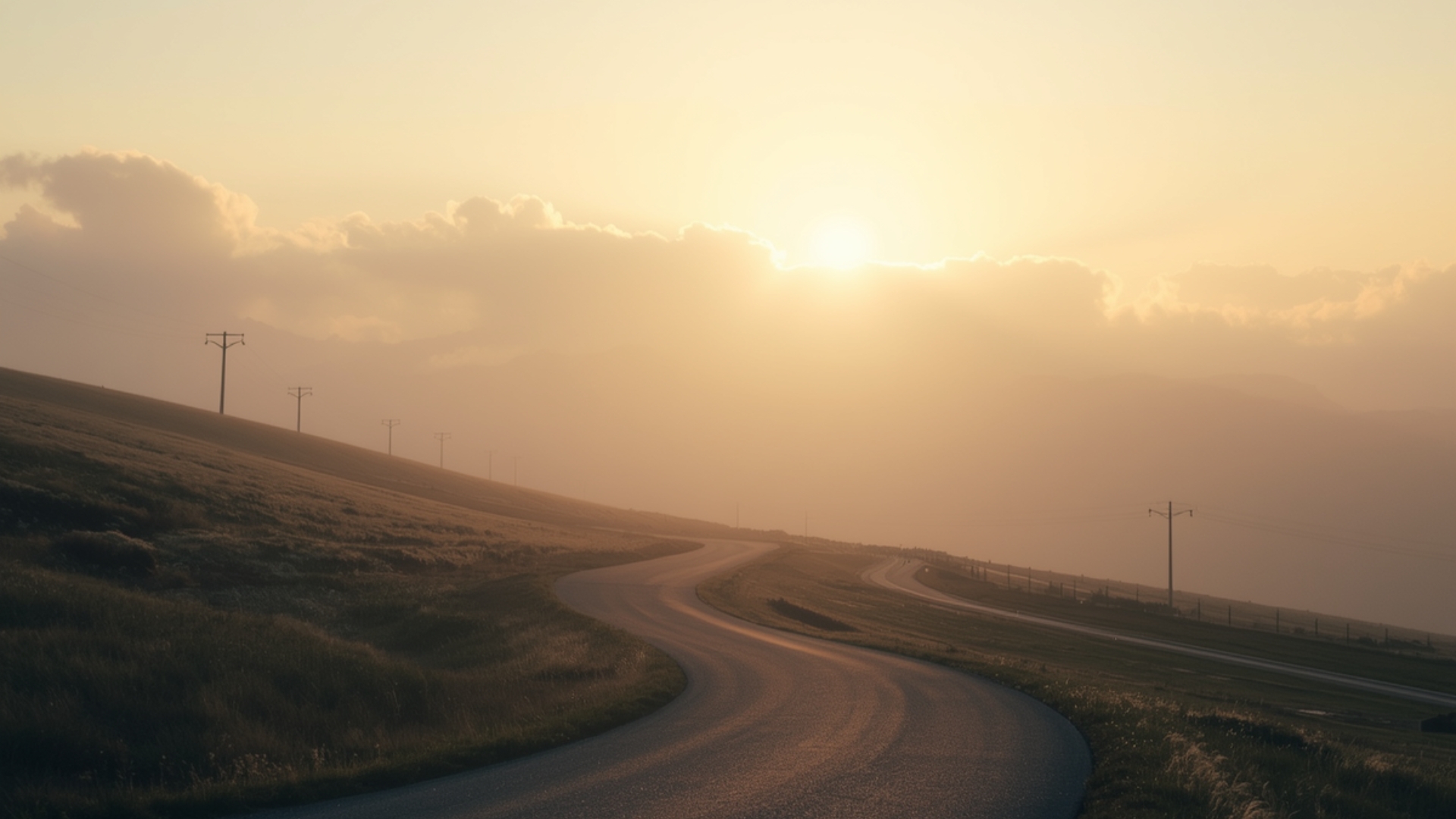
The moment I stopped waiting for life to finally become stable
There was a time when I believed life would eventually become stable.
Not perfect.
Not easy.
But stable.
I assumed that if I worked hard enough, made responsible decisions, and stayed disciplined, I would eventually arrive at a stage where things would feel settled.
A reliable career.
Predictable finances.
A healthy body.
A clear future.
Not necessarily extraordinary—but secure.
For a long time, that expectation quietly shaped the way I thought about life.
Many of the choices I made were based on the belief that stability was waiting somewhere ahead.
Then illness interrupted that story.
Not only because it changed my physical condition.
But because it changed my understanding of what stability actually is.
The future I imagined was built on continuity
Before illness, long-term planning felt relatively straightforward.
I assumed that tomorrow would resemble today.
My energy would be available.
My body would cooperate.
My work capacity would remain mostly intact.
Of course unexpected things could happen.
But I treated uncertainty as an exception rather than a structural part of life.
Most planning systems are built around that assumption.
Save for retirement.
Build a career ladder.
Increase income over time.
Work toward long-term goals.
The underlying belief is simple:
The future will be stable enough for plans to unfold.
When that assumption breaks, planning begins to feel different.
Not impossible.
Just fundamentally different.
When your body becomes unpredictable, certainty disappears first
One of the hardest parts of chronic illness is not always the symptoms themselves.
Sometimes it is the disappearance of predictability.
You wake up unsure of what kind of day your body will allow.
You learn that effort does not always produce the same result.
You realize that recovery is rarely linear.
At some point, I found myself searching for certainty again.
I wanted reassurance that things would eventually settle down.
That I would reach a stable version of life.
That one day I would stop adjusting.
But life kept teaching a different lesson.
The lesson was not that stability is impossible.
The lesson was that stability is temporary.
Everything remains subject to change.
The idea of “settling down” can become a hidden source of suffering
We often talk about settling down as if it is the natural destination of adulthood.
Find stability.
Build security.
Reach a point where things finally stay in place.
The problem is not stability itself.
The problem is believing that stability can be permanent.
Because when reality inevitably changes, we experience that change as failure.
We think something has gone wrong.
We think we have lost what we worked so hard to build.
But perhaps change was never the exception.
Perhaps change was always part of the structure.
The expectation of permanence creates a kind of invisible tension.
We keep trying to freeze life in a shape that life was never designed to maintain.
A life designed around adaptation feels different
After illness, I gradually stopped asking:
“How can I make life stable forever?”
Instead, I started asking:
“How can I remain adaptable when life changes again?”
That shift changed many of my decisions.
I became less interested in maximizing everything.
More interested in flexibility.
Less interested in squeezing every possible advantage out of a situation.
More interested in preserving room to respond when circumstances changed.
This influenced how I think about work.
Money.
Health.
Time.
And even success.
Because the most valuable resource was no longer optimization.
It was adaptability.
Ironically, that perspective often created more resilience than the pursuit of stability ever did.
Stability is not a destination—it is a temporary condition
One realization became increasingly difficult to ignore.
Every stable period in life is temporary.
A career can change.
A company can disappear.
Markets can fall.
Relationships evolve.
Health shifts.
Circumstances move.
Even the most carefully designed life remains dynamic.
The difference is that most people do not notice this while life is cooperating.
Illness simply makes that reality impossible to ignore.
It removes the illusion earlier.
What appears stable is often just change moving slowly enough that we do not notice it.
Recognizing this can feel uncomfortable.
But it can also be freeing.
Because we stop expecting permanence from things that cannot provide it.
Planning still matters—even without certainty
Letting go of the illusion of settling down does not mean giving up on planning.
In fact, I still plan.
I still save.
I still work toward long-term goals.
The difference is that I no longer expect plans to unfold exactly as imagined.
Plans are no longer predictions.
They are directions.
They help me move forward.
They do not guarantee outcomes.
This distinction became especially important after illness.
At one point, I realized that working after illness feels harder unpredictable energy chronic fatigue type situation than most traditional career advice assumes.
Many planning models assume consistent capacity.
My reality often does not.
That does not mean planning is useless.
It simply means planning must allow room for uncertainty.
Freedom begins when we stop demanding permanence
One of the quietest changes illness brought into my life was this:
I stopped waiting to arrive.
I stopped believing there would be a final stage where everything became fixed and secure.
Instead, I began to see life as an ongoing process of adjustment.
Not because something is wrong.
Because that is what life has always been.
The illusion of settling down promises comfort.
But it often creates disappointment.
Reality keeps moving.
Bodies change.
Circumstances evolve.
New challenges appear.
New opportunities emerge.
The goal is not to eliminate change.
The goal is to build a life capable of meeting change when it arrives.
Conclusion
For years, I believed stability was something I would eventually achieve.
A destination waiting somewhere ahead.
Illness challenged that belief.
Not by making stability impossible.
But by showing me that stability was never permanent to begin with.
Today, I still value security.
I still appreciate predictable seasons of life.
But I no longer expect them to last forever.
What matters more is building a life that can adapt when conditions change.
Because perhaps the deepest form of stability is not found in permanence.
Perhaps it is found in the ability to keep moving, even when life refuses to stay still.
🔗Related Articles