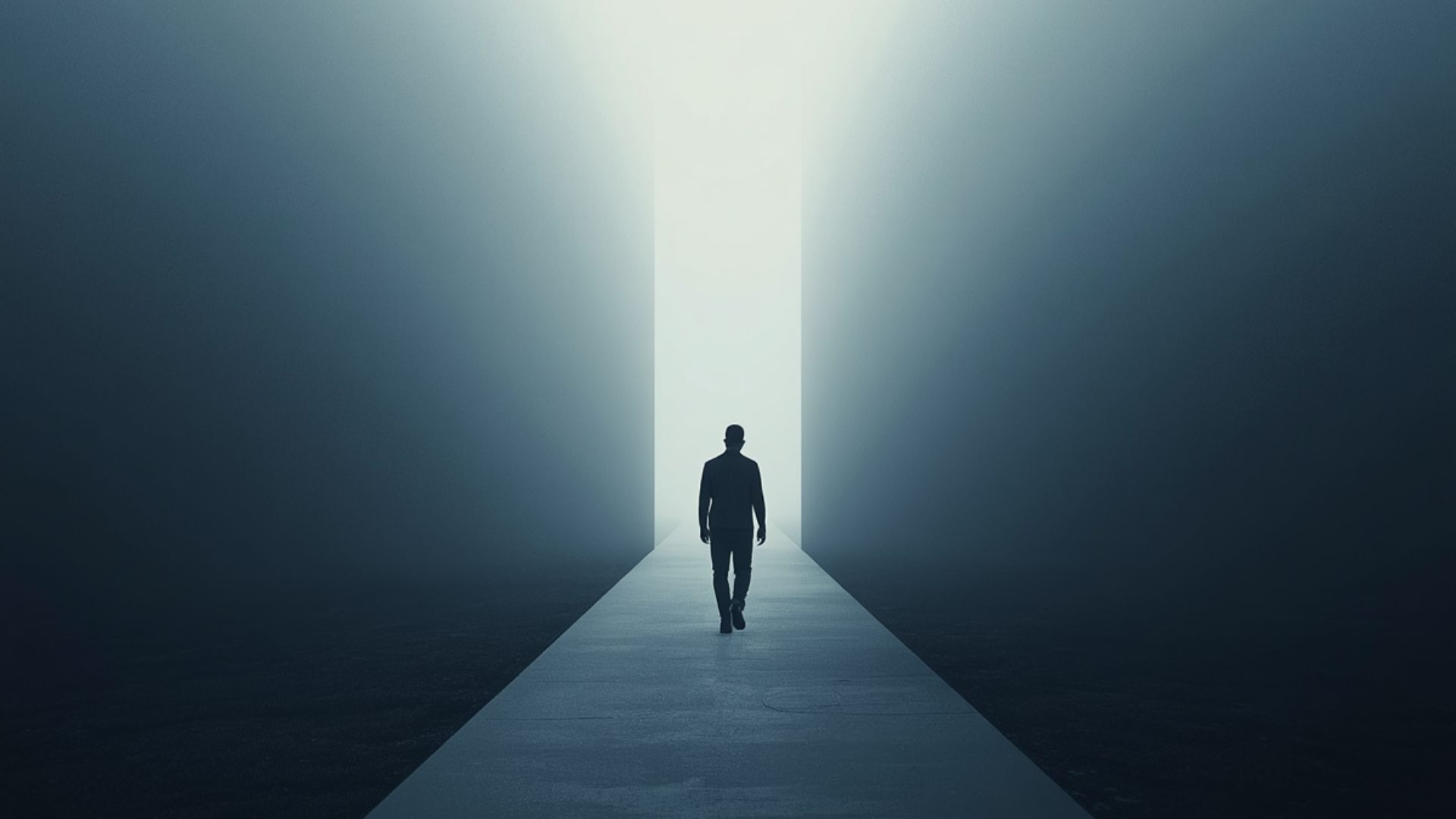
The Myth of a “Final Decision” in Life Redesign
When people talk about changing their lives, they often imagine a single, defining moment.
A decision.
A turning point.
A clear line between “before” and “after.”
But when illness enters your life, that idea quietly breaks down.
There is no single decision that fixes everything.
No moment where things become stable again.
Instead, what you face is something much less dramatic—but far more real.
A continuous process of redesign.
Not once.
But again and again.
Why Stability Becomes an Illusion After Illness
Before illness, many of us rely on an unspoken assumption:
That our capacity is stable.
That we can plan based on consistency.
That effort leads to predictable results.
But illness changes that foundation.
Energy fluctuates.
Pain interrupts focus.
Recovery is not linear.
What used to be reliable becomes uncertain.
And in that uncertainty, the idea of “deciding once and moving on” stops working.
Because the conditions themselves keep changing.
Redesign Is Not a Choice You Make Once
One of the hardest things to accept is this:
You are not redesigning your life one time.
You are redesigning it continuously.
At first, this feels exhausting.
You might think:
“Why can’t I just figure this out once and be done?”
But that expectation comes from a world where conditions stay stable.
After illness, they don’t.
Your body changes.
Your limits shift.
Your priorities evolve.
So the structure of your life has to adapt with them.
Not once.
But repeatedly.
The Emotional Weight of Ongoing Adjustment
Continuous redesign is not just a practical challenge.
It is an emotional one.
Because each adjustment can feel like starting over.
Letting go of a routine you just built.
Admitting that something no longer works.
Re-evaluating decisions you thought were “right.”
There is a quiet frustration in that.
A sense that you are never fully settled.
And yet, this is not failure.
It is a reflection of reality.
What Actually Changes: From Optimization to Adaptation
Before illness, many systems are built around optimization.
Maximize output.
Increase efficiency.
Push limits.
But optimization assumes stability.
It assumes that the system you are improving will remain usable.
After illness, that assumption breaks.
What replaces it is not a better optimization strategy.
It is a different philosophy entirely:
Adaptation.
Instead of asking,
“How do I get more out of this system?”
You begin asking,
“How do I adjust this system so it still works today?”
This shift is subtle—but fundamental.
A Practical Example of Continuous Redesign
There were times when I tried to rebuild a consistent work routine.
Something structured. Predictable. Efficient.
At first, it seemed to work.
But after a few days, or sometimes just hours, things would change.
Pain would increase.
Energy would drop.
Focus would become harder to sustain.
And I had to adjust.
Shorten sessions.
Change tasks.
Pause entirely.
This wasn’t a one-time correction.
It became a pattern.
A cycle of building, testing, adjusting, and rebuilding.
At some point, I realized something important:
working after illness feels harder when your energy is unpredictable in a chronic fatigue type situation
Not because I lacked discipline.
But because the system itself required constant redesign.
Why This Is Not a Step Backward
It is easy to see continuous adjustment as a regression.
As if you are failing to “lock in” a stable life.
But that perspective comes from the wrong baseline.
You are not returning to your old system.
You are building a new one.
And new systems—especially under unstable conditions—are not fixed.
They evolve.
The ability to adjust is not a weakness.
It is the core skill.
Redesign as a Skill, Not a Phase
What changes over time is not the need to redesign.
It is your relationship to it.
At first, redesign feels like disruption.
Later, it becomes a skill.
You start to notice patterns faster.
You adapt with less resistance.
You recover from changes more quickly.
Eventually, you stop expecting stability as the end goal.
And instead, you begin to trust your ability to adjust.
Letting Go of the “Finished Version” of Life
One of the most subtle shifts is this:
You stop searching for a “finished” version of your life.
A version where everything is set.
Where no further changes are needed.
Because you realize that such a version does not exist.
Not in your current reality.
And maybe, not even in general.
What exists instead is something more fluid:
A life that continues to be shaped.
What Continuous Redesign Makes Possible
There is a hidden upside to this process.
When you stop expecting permanence, you gain flexibility.
You become less attached to specific structures.
Less rigid in your expectations.
More responsive to reality.
This does not make things easier.
But it makes them more workable.
Because you are no longer trying to force stability where it does not exist.
Redesign Is How Life Continues
In the end, redesign is not something extra you have to do.
It is how life continues under new conditions.
Not a single decision.
But an ongoing process.
Not a fixed answer.
But a series of adjustments.
And maybe that is what rebuilding actually looks like.
Not a return.
Not a clean restart.
But a continuous act of redesign.
🔗 Related Articles